
Paris
A Long Weekend in Paris, Planned Badly on Purpose
No itinerary, two dinner reservations, and a great deal of walking between them. The only way I travel now.

Locations
Paris
Days
4
Budget
€1,100 for two
Rating
96
I used to plan trips to the hour and come home exhausted, having seen everything and eaten badly. Now I book two dinners and leave the rest of it entirely alone.
Paris rewards this more than anywhere I have tried it. The city is dense enough that walking in roughly the right direction always produces something, and there is no version of a day here that is wasted.
Four days, one arrondissement as a base, two reservations, and about fifty kilometres on foot. It is the best trip I took last year and it took forty minutes to plan.
Fly into
Charles de Gaulle (CDG)
Stayed at
A fifth-floor walk-up in the 11th, no lift
Getting around
Entirely on foot — I did not take the métro once
The scorecard
Food
99
Lodging
94
Entertainment
98
Cost
92
Safety
95
Pros
Endlessly walkable — I did not take the métro once in four days
The two-reservation method genuinely works
Lunch formules get you into expensive kitchens for about twenty euros
Museums are far better in the last two hours than the first
Cons
The two dinners need booking weeks out — the one bit of planning you cannot skip
Sunday closes more than you expect, bakeries included
Anywhere with a queue of visitors outside is not the good one
August is not the month; half the city is shut
The two-reservation method
Here is the whole system. Before you go, book two dinners — the two meals you actually care about — on the two nights you will have the most energy. That is usually the second and the last. Everything else is left completely open.
The reason it works is that the good restaurants in Paris are small and book out weeks ahead, so spontaneity fails you exactly where it matters most. But lunch, coffee, bakeries, markets and wine bars are all walk-in, all day, everywhere. Booking the two hard things buys you the freedom to improvise the other twenty meals.
The corollary is that you have to be willing to eat one bad lunch. That is the price of not planning and it is a bargain. The best thing I ate all weekend was a jambon-beurre, standing on a corner, from a place I could not find again if you paid me.
Where to base yourself
Stay east. The 11th, the 10th around the canal, or the 20th up towards Ménilmontant. This is where people actually live, the food is better and cheaper, and you are still inside a comfortable walk of everything you came to see.
The 1st through the 8th are beautiful and largely a museum of themselves. You will walk through them constantly; you do not want to sleep in them, and you will pay roughly double for the privilege.
The practical test for a Paris flat is the stairs. Ours was a fifth-floor walk-up with no lift, which is extremely normal and which nobody mentions in the listing. Worth checking if you are arriving with anything heavy.
Eating between the reservations
Breakfast is a bakery, standing up or on a bench. Look for one selling a baguette tradition rather than the ordinary baguette — it is the version made under the old rules, and the difference is not marginal. A croissant should be visibly layered and shatter when you bend it; if it bends quietly, walk on.
Lunch is where Paris is cheapest and most generous. The formule — a set two or three courses at lunchtime, often around twenty euros — will get you into kitchens whose dinner menus are three times that. Every neighbourhood bistro has one chalked outside and almost nobody visiting seems to order it.
Between meals: a market if you happen on one, and a cave à manger — a wine shop with a few tables — in the late afternoon. Order a glass of something you have not heard of and a plate of cheese, and ask them what they would drink. That question has never once been received badly.
The one thing I would tell anyone: eat within about a kilometre of where you are staying at least twice. The neighbourhood place that is not on anybody’s list is the meal you will still be thinking about in six months.
Museums, timed properly
Go late. Most of the big museums are at their worst between eleven and three and noticeably calmer in the final two hours, and several stay open one or two evenings a week — the Louvre and the Musée d’Orsay both do. An hour and a half at seven in the evening beats four hours at midday in every respect.
Pick one thing and leave. The failure mode is treating a museum as a box to be emptied. I went to the Orsay for the Manet rooms, spent an hour, and walked out past everything else without guilt.
The smaller ones are the real pleasure: the Musée de la Vie Romantique, the Rodin garden, the Carnavalet for the history of the city itself. Half the size, a tenth of the people, and you leave with something rather than a headache.

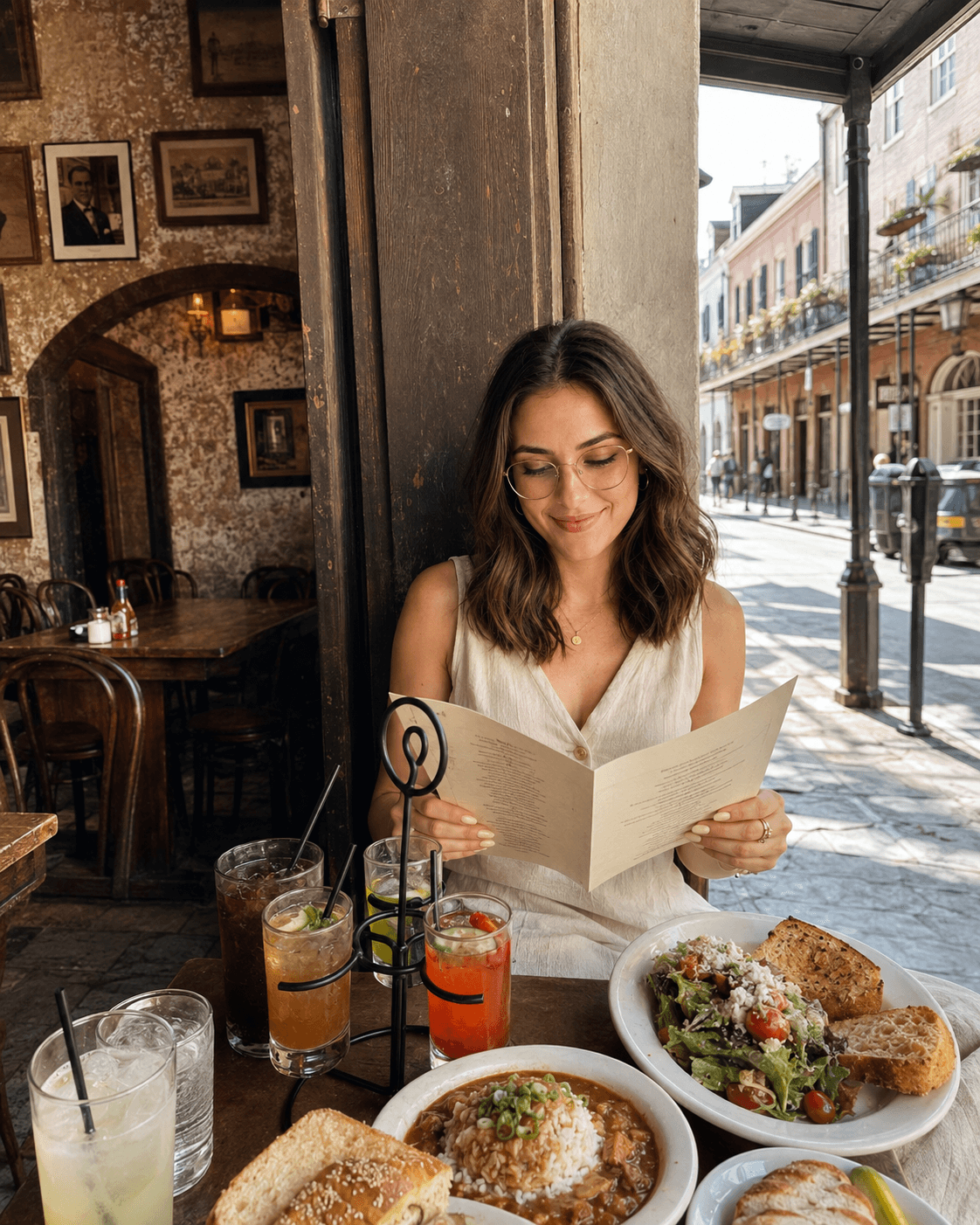
Day 1 — Arrive and walk
Drop the bag, pick a direction, walk until you are hungry, eat wherever you have stopped. This sets the tone for the whole weekend.
Day 2 — One museum, one dinner
Go late in the afternoon when the crowds thin. Dinner is the first reservation — make it the better one, while you still have the legs.
Day 3 — Market, then nothing
A morning market, a long lunch formule, an afternoon that goes nowhere in particular. The best day of the trip, every time.
Day 4 — The second dinner, then home
One more long walk east, the second reservation, and out. Move it to lunch if the flight is early.