
Austin · Lockhart
A Weekend in Austin, Entirely About Barbecue
Three days, four smokehouses, one queue I stood in for two hours and would stand in again. Notes from a very single-minded trip.

Locations
Austin · Lockhart
Days
3
Budget
$1,050 for two
Rating
86
I flew in with a list of four places and no other plans, which is the correct way to visit a city whose best thing is served from eleven in the morning until it runs out.
It is also a much better drinking and music town than I expected, which is fortunate, because there is a hard limit on how much brisket a person can eat before dark.
Three days is the ceiling. I say that as someone who went specifically to eat and still tapped out on the last afternoon.
Fly into
Austin-Bergstrom (AUS)
Stayed at
A motel off South Congress with a pool nobody used
Getting around
A rental car. You need one, and parking downtown is misery
The scorecard
Food
96
Lodging
82
Entertainment
90
Cost
84
Safety
82
Pros
The best barbecue in the country, and it is not especially close
Live music every night without booking anything
Lockhart is an hour away and worth the drive
Everything is cheaper than the equivalent in New York
Cons
You need a car, and parking downtown is miserable
The queues are real — two hours at the famous one is normal
Almost nothing good is open past eight for food
Three days is the ceiling before it stops being enjoyable
How barbecue works here
Central Texas barbecue is a specific and quite narrow thing, and knowing the rules makes the whole trip better. The meat is beef rather than pork, the seasoning is salt and coarse black pepper and essentially nothing else, and it is cooked over post oak in an offset smoker for twelve to eighteen hours. There is no sauce on it. Sauce is on the table, and using it is not a crime but nobody is doing it.
The tradition comes from the German and Czech butchers who settled this part of Texas in the nineteenth century — meat markets that smoked whatever had not sold and served it on butcher paper with bread, pickles and onions on the side. That is still exactly how it arrives: no plate, no cutlery, paper on a tray.
You order by weight, at a counter, from the person slicing. Half a pound of brisket is a generous portion for one. Ask for fatty — the point end, marbled and soft — rather than lean. If you order lean you will spend the rest of the meal looking at somebody else’s plate, and you will deserve it.
The other things worth ordering: pork ribs, and the sausage, which is coarse-ground and snappy and made in-house at any place worth queueing for. Sides are an afterthought here and it is fine to skip them entirely.
The queue is the trip
The famous places open at eleven and serve until they sell out, which can be one in the afternoon. Two hours in line is normal at the best-known ones and I want to be clear that this is not an obstacle to the experience — it is most of it.
Everyone in that line is there for the same single-minded reason and will talk to you about it for two hours. I left with six more recommendations, a strong opinion about which of them was wrong, and a much better plan for the following day than the one I arrived with. Bring a folding chair and a drink; plenty of people do.
If you would rather not queue at all, go at eleven on a weekday to a place that is merely very good rather than internationally famous. The gap in quality between the best barbecue in Texas and the fifth best is much smaller than the gap in waiting time.
Lockhart, and the old-school version
An hour south of the city is a small town that the state legislature formally named the barbecue capital of Texas, and it is where you go to see the tradition in its undiluted form. The places here are old meat markets with smoke-blackened walls, and at a couple of them they still weigh your meat in front of you and hand it over on paper with no fork in sight.
It is a different experience from Austin — less polished, no craft beer list, no queue of people who flew in — and it is worth the drive for that alone. Go for lunch, and go hungry.
This was also the meal where I understood why the bread is white and cheap and slightly sweet. It is not there to be good. It is there to soak up fat and carry pickles, and any better bread would get in the way.
The rest of the city, once you can’t eat any more
There is live music every night of the week and almost none of it requires booking anything. Wander down a street with open doors and go into whichever room sounds best. It is one of very few cities where that approach reliably works.
Barton Springs is a spring-fed pool in the middle of the city that sits at about twenty degrees all year round, and it is the correct antidote to three days of smoked beef. Even in January there are people swimming in it, and after two barbecue lunches you will understand why.
One practical note: you need a car, and downtown parking is genuinely miserable. Stay somewhere with a lot, drive to the barbecue, and walk everywhere else.
The last lesson, learned the hard way: stop at three places, not four. The fourth is where a good trip becomes a story about indigestion.
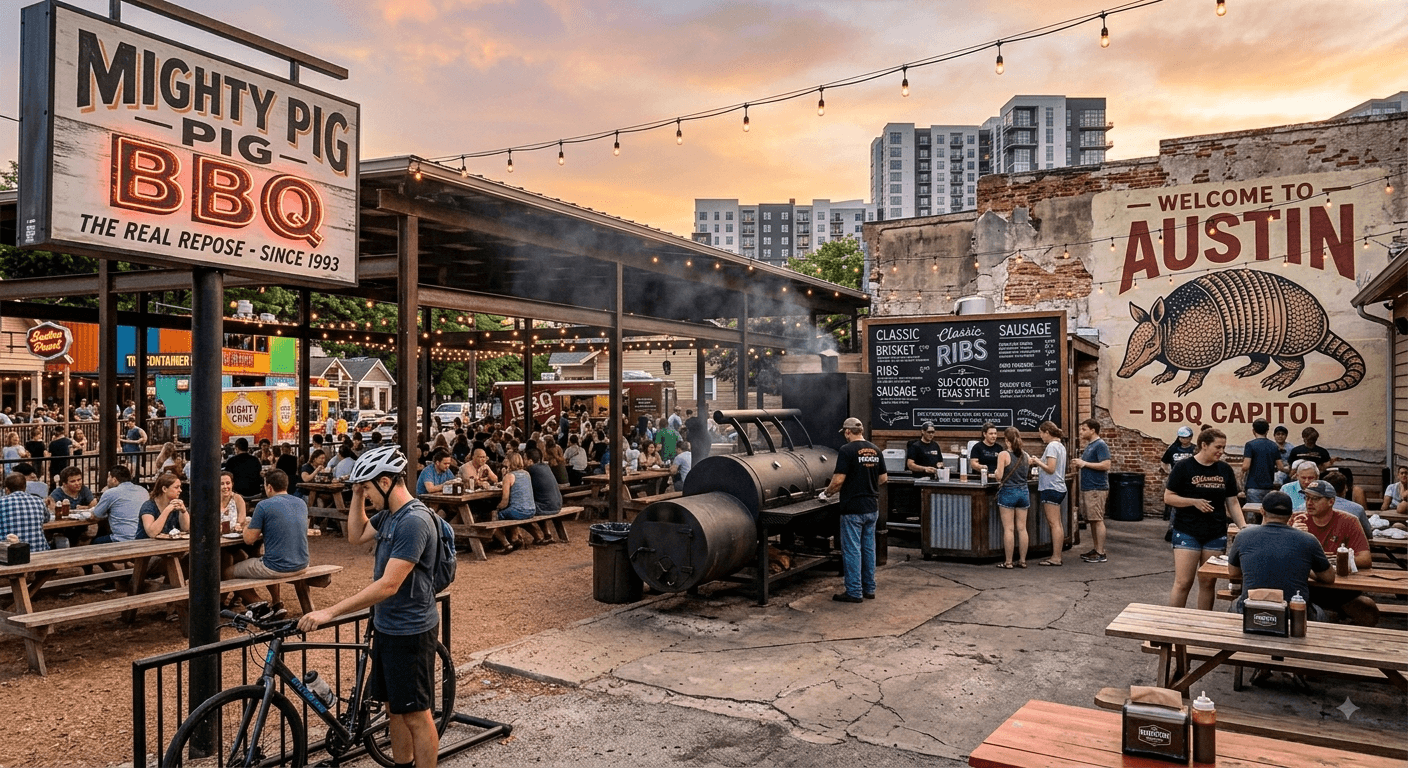
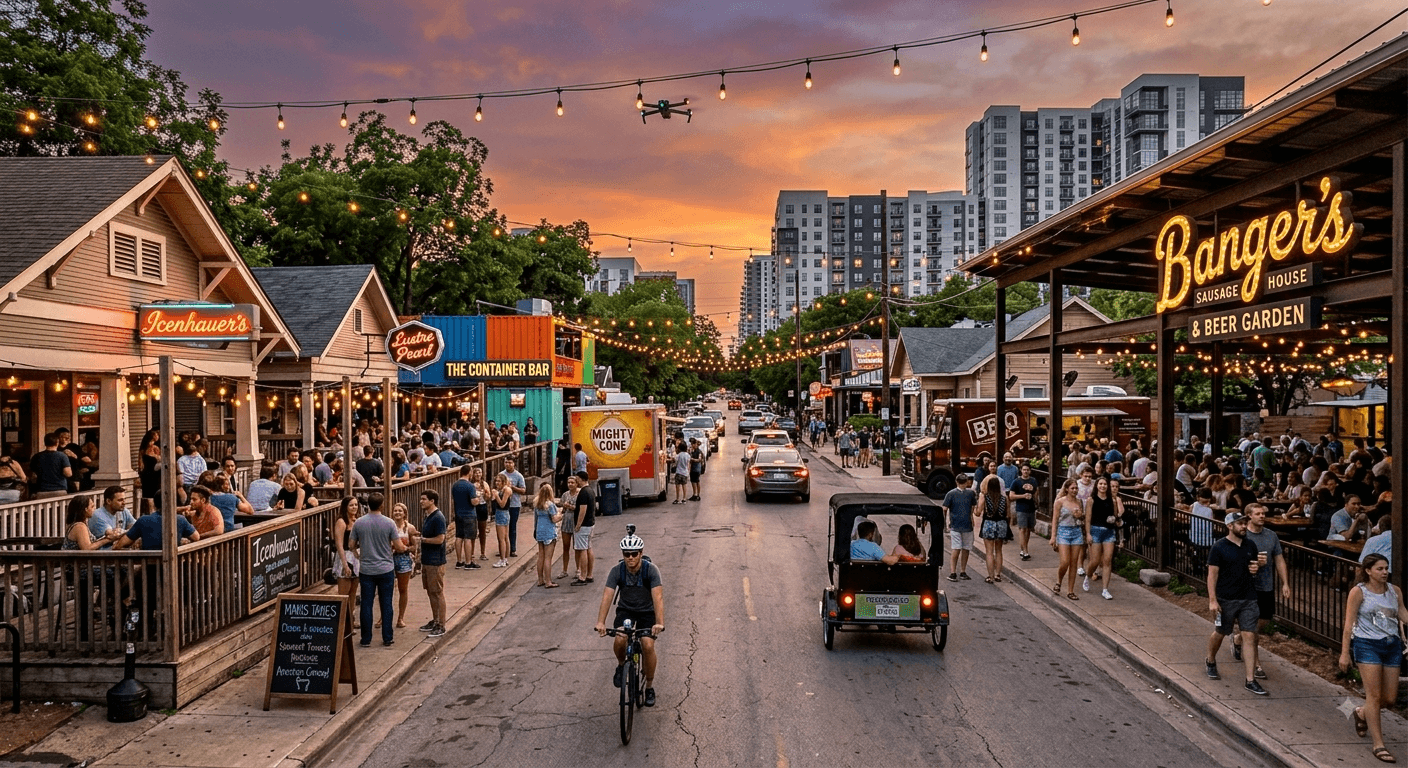
Day 1 — The queue
Get in line by nine for an eleven o’clock opening. Order fatty brisket, ribs and sausage, by weight, and eat it off the paper.
Day 2 — Lockhart, then music
Drive out for the old-school meat markets where they weigh it in front of you. Back for the evening, and let the night find its own shape.
Day 3 — One more, then Barton Springs
A third and final smokehouse at opening, then cold water in the middle of the city. Stop at three places, not four.